
Demo data, not accurate. These figures are made up to show how the Tracker will look. They are not findings.
An imaginary country
Registration Tracker
Shared registration updates can show long waits, repeated delays, different outcomes and products that do not fit the pathway.
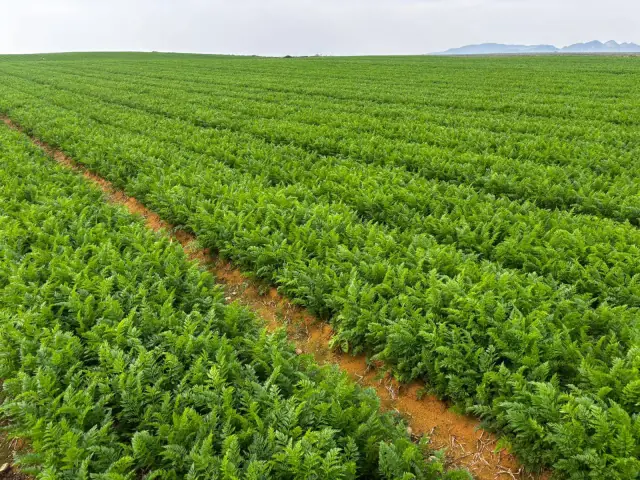
Photo: Jen's own.
236daysMiddle case for an application still pending
28applications pending
9of 23 pending applications are past the example timeframe
Which registration types wait longest?
DemoNew molecule applications wait longest: the middle case has waited 612 days, about 20 months.
- Middle case (median)
- Longest current wait
- New molecule / new active ingredient · 6 pending612 days middle · 702 longest
- New formulation · 6 pending340 days middle · 510 longest
- Fertilizer · 5 pending290 days middle · 410 longest
- Generic active ingredient · 5 pending230 days middle · 452 longest
- Parallel registration · 3 pending126 days middle · 160 longest
- Daughter registration · 3 pending104 days middle · 138 longest
Show the numbers for Registration types by pending time
| Type | Pending | Middle case (days) | Longest (days) |
|---|---|---|---|
| New molecule / new active ingredient | 6 | 612 | 702 |
| New formulation | 6 | 340 | 510 |
| Fertilizer | 5 | 290 | 410 |
| Generic active ingredient | 5 | 230 | 452 |
| Parallel registration | 3 | 126 | 160 |
| Daughter registration | 3 | 104 | 138 |
The dot is the middle case for each type. The pale bar runs to the longest wait.
Where are applications blocked?
DemoTechnical review holds the most: 10 of 28, with further information reported as a block.
- 1. Administrative check21 days, middle case3
Reported: Nothing reported
- 2. Initial review58 days, middle case5
Reported: Payment confirmation
- 3. Information requests150 days, middle case7
Reported: Category uncertainty
- 4. Technical review210 days, middle case10
Reported: Additional information requested
- 5. Decision30 days, middle case3
Reported: Awaiting decision
Show the numbers for Stages where applications wait
| Stage | Applications | Middle case (days in stage) | Reported block |
|---|---|---|---|
| Administrative check | 3 | 21 | Nothing reported |
| Initial review | 5 | 58 | Payment confirmation |
| Information requests | 7 | 150 | Category uncertainty |
| Technical review | 10 | 210 | Additional information requested |
| Decision | 3 | 30 | Awaiting decision |
These are invented stages in an imaginary country. The orange bar marks where most applications are waiting.
Which types see different outcomes?
DemoHalf of parallel and daughter applications are approved. Most new molecule applications are still waiting.
- Pending
- Approved
- Rejected
- Withdrawn
- New molecule / new active ingredient9 applications63
- New formulation12 applications633
- Generic active ingredient11 applications533
- Parallel registration6 applications33
- Daughter registration6 applications33
- Fertilizer16 applications5335
Show the numbers for Outcomes by registration type
| Type | Pending | Approved | Rejected | Withdrawn |
|---|---|---|---|---|
| New molecule / new active ingredient | 6 | 3 | 0 | 0 |
| New formulation | 6 | 3 | 3 | 0 |
| Generic active ingredient | 5 | 3 | 3 | 0 |
| Parallel registration | 3 | 3 | 0 | 0 |
| Daughter registration | 3 | 3 | 0 | 0 |
| Fertilizer | 5 | 3 | 3 | 5 |
Each bar is one registration type, split by what has happened to its applications so far.
Which applications are overdue?
Demo9 of 23 pending applications in this example are past the example timeframe.
- Beyond the example timeframe
- Still within it
- New molecule / new active ingredientExample: 600 days3 of 6 beyond it
- New formulationExample: 300 days3 of 6 beyond it
- Generic active ingredientExample: 460 days0 of 5 beyond it
- Parallel registrationExample: 120 days3 of 3 beyond it
- Daughter registrationExample: 150 days0 of 3 beyond it
Show the numbers for Overdue pending applications
| Type | Example timeframe (days) | Pending | Beyond it |
|---|---|---|---|
| New molecule / new active ingredient | 600 | 6 | 3 |
| New formulation | 300 | 6 | 3 |
| Generic active ingredient | 460 | 5 | 0 |
| Parallel registration | 120 | 3 | 3 |
| Daughter registration | 150 | 3 | 0 |
These timeframes are invented to show the comparison, not legal deadlines in any country. Fertilizer is left out of this example.
How often is the pathway a poor fit?
DemoAbout 1 in 4 applicants say their product does not fit. The most common reason is that no suitable category exists.
- Fits · 38 of 60
- Does not fit · 15 of 60
- Not sure · 7 of 60
Why it does not fit (15)
- No suitable category5
- Advice received4
- Evidence burden3
- Delay or repeated difficulty3
Show the numbers for Pathway fit and reasons
| Answer or reason | Applications |
|---|---|
| Fits | 38 |
| Does not fit | 15 |
| Not sure | 7 |
| Reason: No suitable category | 5 |
| Reason: Advice received | 4 |
| Reason: Evidence burden | 3 |
| Reason: Delay or repeated difficulty | 3 |
Grouped answers from applicants. Names and private notes are never shown.
How to read this
Based on a sample of 60 demo applications. Every chart above draws on the same made-up sample in an imaginary country. The business examples below are separate invented examples.
- The sample is 60 applications across six registration types: 28 still pending, 18 approved, 9 rejected and 5 withdrawn.
- Fertilizer applications count in the pending, stage, outcome and fit charts. The overdue example covers only the other five types.
- Real reporting would show only reviewed, consented groups that protect contributors. It is separate from this demonstration.
- Nothing here describes a real application, organisation or product.
Why delays matter to a business
DemoSeparate invented examples show the business consequences. In a sample of 200 applications, 68 received more than one information request. Repeated product characterisation, laboratory tests and paperwork can add work and costs.
Show the numbers for Repeated information requests
| Information rounds or item | Applications |
|---|---|
| 2 rounds | 48 |
| 3 rounds | 16 |
| 4 rounds | 4 |
| Product characterisation | 30 |
| Laboratory results | 24 |
| Use and label details | 20 |
| Administrative documents | 14 |
An application can have several repeated items. Pathway fit is one possible contributor to delay; these examples cannot show that it causes delay.
Fees, third-party costs and the cost of waiting
Average fees and third-party costs total about US$18.0k per registration. Third-party costs include consultants, laboratories and administration. Lost sales and stock held while waiting are an additional cost. All amounts are invented, in US dollars and rounded to show scale.
Show the numbers for Cost breakdown
| Item | Average per registration |
|---|---|
| Consultants and dossier preparation | US$7.4k |
| Regulator fees | US$4.6k |
| Laboratory and field studies | US$3.9k |
| Translation, couriers and admin | US$2.1k |
Pathway A: In this imaginary country, the route for products described as established and lower-risk. Fees US$3.2k, third-party costs US$10.0k; a middle wait of 6.8 months at an estimated US$1.5k per month costs US$10.2k in waiting.
Pathway B: In this imaginary country, the route for products described as higher-risk or broader in use. Fees US$7.1k, third-party costs US$19.4k; a middle wait of 12.9 months at an estimated US$4.2k per month costs US$54.2k in waiting.
Example seed treatment
An invented plant-extract seed treatment filed under Pathway B, although its description matches the Pathway A profile. Its 14-month journey ends in conditional approval. At Pathway B's example monthly cost, that wait costs US$58.8k, in addition to fees and third-party costs. It cannot show that a different pathway would have been faster.
Show the numbers for Fictional product journey
| Step | Months |
|---|---|
| Technical review | 5 |
| First request for information | 3 |
| Second request for information | 3 |
| Final assessment | 3 |
Bring the Tracker to your country
Talk to ABA about what the Tracker could offer your country, or discuss contributing your business's registration experience.